Introduction
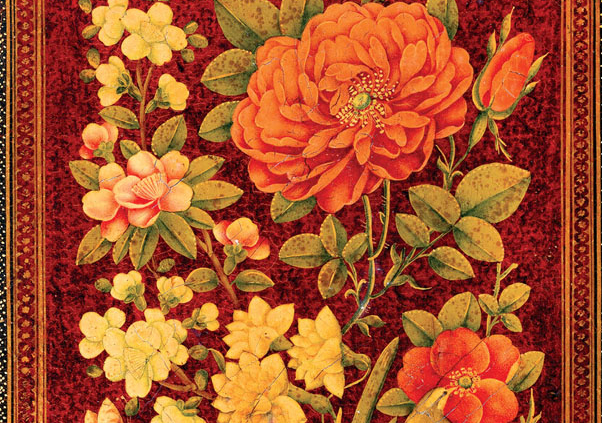
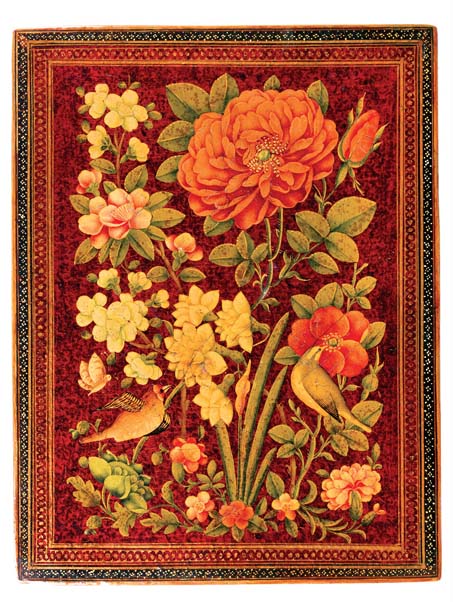
The art of Gol-o-Morgh (flower-and-bird painting) is one of the most pleasant and original manifestations of Iranian art; An art that came out of the heart of traditional painting and with magnificent patterns of fantastic flowers and light-winged birds, has been imprinted on walls, papers, and even hearts for centuries. This art is not only a reflection of oriental aesthetics and a mystical view of nature, but also a pictorial narrative of Iranian peace, love and tender life.
But these days, Gol-o-Morgh (flower-and-bird painting) are not only seen in the frames of paintings or pages of old books. Today's fashion world - with all its dynamism and diversity - has opened a way to recreate this art. Contemporary fashion designers and artists have taken Gol-o-Morgh (flower-and-bird painting) out of the traditional context and brought them to modern fabrics, art coats, handbags and even interior design.
In this article, we will take a look at the past of this charming art, the evolution it has taken, and the place it has found today in the world of fashion and our daily life. It is a journey between ancient paintings and modern clothes, from old dyes to Modern fashion wash.
Historical roots of Gol-o-Morgh art
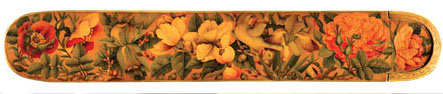
The art of flowers and birds was formed from Iranian painting, especially during the Safavid and Qajar periods. At first, this style was mostly seen in the margins of manuscripts, Qurans and poems of poets such as Hafez and Saadi.
In the painting of Iranian flowers and birds, a very strong connection and an unbreakable link with literature and mystical poems of Manzoum is considered. In this type of painting, the chicken is the manifestation of the soul in Iranian mysticism. In fact, flower and bird painting is a description of a type of old Iranian painting that has the subject of flowers, leaves, birds such as nightingales and sometimes butterflies, and the elements of flowers and birds in this painting have a symbolic meaning. In this type of painting, the main focus is on the basis of the chicken, which is a symbol of Islamic mysticism and enlightenment and mystical beliefs. One of the brilliant aspects of the Qajar period art is flower and bird painting, a review of which helps a lot to understand the capabilities of this art and its developments until the Qajar period (Atesh Dast, 1401, 83).
Technical evolution and aesthetics of Gol-o-Morgh (flower-and-bird painting) in passing time
At first, Gol-o-Morgh (flower-and-bird painting) were drawn with mineral and plant colors on Aharmohra papers. But with the passage of time and the development of tools, the techniques of this art also changed. Artists gradually used ink, gouache, watercolor and even acrylic to create works.
In terms of stylistics, the Qajar period was a turning point in the boldness of forms, colors and compositions. More flowers and more detailed birds. Today, many artists, by combining traditional and modern techniques, create works that are both rooted in the past and speak in today's language.
From the middle of the Safavid period, a new type of painting emerged, which had its roots in the ancient painting traditions of Iran on the one hand, and was influenced by Chinese paintings and European designs on the other hand. This new type of Iranian painting is called (flower and bird) (Rezaei, 1384, 3). The painting of flowers and birds started in the Safavid era. At that time, birds were killed with great care, and after that, a great change was seen in this art. It cannot be done and it was transferred to the Qajar period. The meaning of flower in this type of painting is all kinds of flowers and plants, as well as chicken, which refers to birds such as the nightingale, which in the paintings, apart from the nightingale, you can also see birds such as peacock, hooded, simorgh or anga, etc. The common point in all the paintings of flowers and birds is the presence of birds in nature and the use of stylists. The most important evolution of painting in the Safavid period was the separation of painting from calligraphy. Before the Safavid period, Iranian painting was in the service of Iranian literature and writing, and with its acceptance of literature, an opportunity was provided for the emergence of new subjects and styles. Some people consider this change to open the way for innovation in Iranian painting (Atesh Dast, 1401, 83).
The reflection of Gol-o-Morgh (flower-and-bird painting) in the world of contemporary fashion
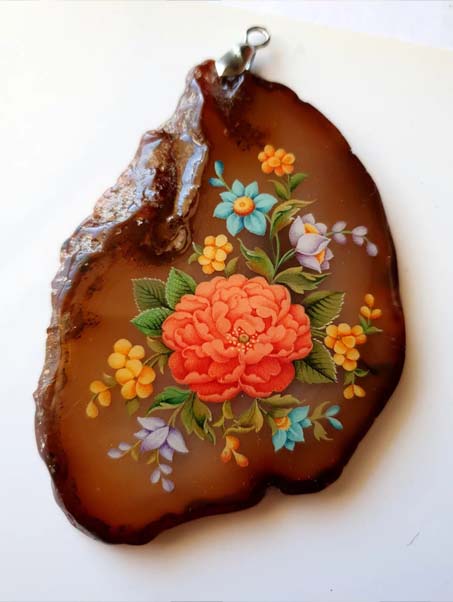
In recent years, we have seen a resurgence of traditional arts in the fashion industry. Gol-o-Morgh, with its inherent beauty and cultural load, has easily opened its way to the world of clothing, accessories and interior decoration.
Designers in Iran and abroad produce clothes with flowers and birds printed or hand painted. Coats, scarves, bags and even shoes with Gol-o-Morgh patterns have created a new market for special tastes. These works are not only clothes, but also carry a cultural identity.
Challenges andThe upcoming opportunities of Gol-o-Morgh (flower-and-bird painting) in the fashion industry
Although the return of Gol-o-Morgh (flower-and-bird painting) to everyday life is a happy event, there are also concerns. One of the challenges is the loss of the originality of art due to its excessive commercialization. Sometimes the pattern of flowers and birds is used only as a "decorative design" without understanding its artistic depth.
However, this new wave is also an opportunity:
To revive traditional art, to brand Iranian artists, and even for cultural export. If this path with respect Going back to the roots and with a new look, Gul and Margh can shine not only in Iran, but also at the global level.
summary
Gol-o-Morgh art is a bridge between our rich past and today's modern world. This art has the capacity to become a part of contemporary lifestyle with its subtle effects, emotional language and deep roots. Not as a passing fad, but as a part of the Iranian aesthetic identity.
Today, when we see Gol-o-Morgh (flower-and-bird painting) on clothes or handbags, it may not be just a beautiful design; Maybe it is a message from the past, and an invitation to the permanence of beauty.
Author: Negin Khosroviani
Resources
Rezaei, Banafsheh. (1384). Study of Gol-o-Morgh (flower-and-bird painting) in the painting art of the Qajar period. Master's thesis, University of Tehran.